
Volume analysis in crypto trading quantifies market participation and the strength behind price moves through probabilistic signals. It contrasts on-chain activity with exchange-based metrics to reveal holder behavior, inflows, and liquidity stress. The approach emphasizes breakout validity, absorption of orders, and potential reversals while highlighting liquidity spikes and volatility. A disciplined workflow converts data into risk-controlled decisions, but ambiguity remains in edge cases, inviting further scrutiny of signals and assumptions.
What Volume Analysis Reveals in Crypto Trading
Volume analysis in crypto trading provides a window into market participation and the strength behind price moves.
Historically, volume indicators flag sustained interest and confirm trends, while divergences warn of potential reversals.
Liquidity spikes accompany rapid moves, amplifying volatility and distribution dynamics.
Probabilistic assessments quantify likelihoods, allowing disciplined decisions; traders measure conviction, risk, and timing, seeking freedom through evidence-based balance rather than assumption.
See also: Virtual Land in Metaverse
On-Chain vs Exchange Data: The Volume Toolkit
On-chain and exchange data offer complementary perspectives for assessing market activity: on-chain metrics reveal participant behavior and settlement flows, while exchange data reflect order-flow dynamics and liquidity depth. The volume toolkit integrates these signals, employing on chain analytics to gauge holder activity, inflows, and network stress, with exchange-derived liquidity metrics. Consider liquidity pools and protocol health when probabilistic inferences diverge.
Reading Volume Signals: Breakouts, Absorption, and Reversals
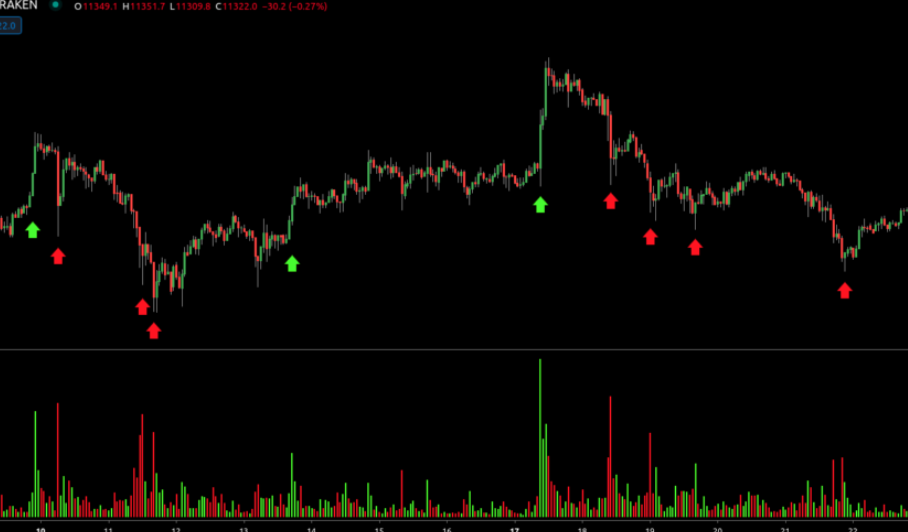
Breaking price activity is read through the prism of volume patterns that indicate distinct market processes: rapid, sustained demand to confirm a breakout; transient absorption that absorbs supply without a proportional price move; and reversals that precede a shift in trend.
Breakout timing emerges from sustained volume surges; absorption patterns signal hidden supply absorption, shaping probabilistic risk and entry discretion for traders seeking freedom.
Practical Workflow: From Data to Trades With Risk Controls
Practical workflow begins with disciplined data acquisition, preprocessing, and metric construction that translate raw trade and quote streams into actionable signals while embedding explicit risk controls. The approach assesses liquidity dynamics and order flow to anticipate price pressure, identifies liquidity traps, and quantifies tail risk. Decisions are probabilistic, data-driven, and restrained, balancing freedom with accountable, transparent trade execution.
Frequently Asked Questions
How Reliable Are Volume Indicators Across Different Coins?
Volume indicators show limited reliability; cross coin consistency varies with liquidity, exchange structure, and market regimes. The assessment is probabilistic: when volume signals align with price moves, reliability increases; otherwise, divergence suggests caution about cross-coin generalizations.
Can Volume Data Predict Long-Term Market Cycles?
Like a weather vane, volume data offers probabilistic signals but cannot guarantee long-term cycle forecasting; it informs volume prediction with conditional confidence, yet cross-asset reliability varies, so conclusions depend on model rigor and risk tolerance in free-market analysis.
What Role Does Wash Trading Play in Volume Signals?
Wash trading can skew signals, creating data anomalies that mimic genuine activity and inflate apparent liquidity, signaling artificial volume; investors should treat exchange manipulation as a probabilistic bias, not a reliable indicator, demanding robust scrutiny and cross-exchange corroboration.
How Do I Calibrate Volume Signals for Low-Liquidity Assets?
Calibrating volume signals for low-liquidity assets requires accounting for calibration challenges and liquidity biases; the approach is probabilistic, data-driven, and rigorous, emphasizing robust uncertainty, adaptive thresholds, and explicit trade-offs that respect an audience seeking freedom.
Are There Preferred Timeframes for Volume Analysis?
Volume spikes reveal that shorter windows detect regime changes; longer windows smooth noise. Preferred timeframes exist but depend on asset liquidity. The analyst shows that probability distributions shift with liquidity, signaling risk when volume spikes accompany liquidity shifts.
Conclusion
Volume analysis in crypto trading yields a disciplined lens on market participation, liquidity shifts, and the durability of moves. A concise anecdote: during a volatile session, a 20% surge in on-chain transfers accompanied by muted exchange volume suggested latent demand and potential absorption, foreshadowing a restrained rally rather than a collapse. This pattern, framed by probabilistic estimates and risk controls, reinforces that corroborating on-chain and exchange signals reduce false positives and sharpen entry timing within a transparent workflow.